Thursday, 29 January 2015

The impact the learning environment has on the learner

The ICT rich learning environment
 
 
This post is going to explore the impact that the learning environment can have on the learner, in particular, the impact that an ICT rich environment can have on the enquiring mind.
 
 
Inquiry based learnining

 
Firstly i would like to start by looking at what inquiry based learning is. Inquiry based learning is a term that encompasses a number of approaches to teaching and learning. It is based around constructivist learning theories where understanding is built through active development of conceptual mental frameworks by the learner. It is in contrast to more traditional learning, with a strong emphasis on the development of a deeper understanding of a topic, rather than just ‘learning’ the curriculum content. Research by Bransford, Brown and Cocking (2001) has identified three key implications for effective instruction and teaching:
        1.Students come to the classroom with preconceptions about the world. This means teaching practices must draw out and work with students preexisting understandings and make student ‘thinking’ visible and central to the learning.
        2.Competence in an area of study requires factual knowledge organized around conceptual frameworks to facilitate knowledge retrieval and application. Classroom activities should be designed to develop understanding through in-depth study of curriculum topics.
        3.Meta-cognition (thinking about thinking) helps students take control of their learning. Opportunities for students to define learning goals and monitor their own understanding need to be embedded into classroom tasks.
Inquiry learning has got to be well planned and structured. Teachers and instructers must invest in it to make sure that the learning tasks are connect to students lives and the world around them, but they must also have clear and achievable learning targetes. Neil Stephenson.
 
As inquiry based learning ideally takes place in a constructivist classroom environment, before we explore the impact an ICT rich environment has on the enquiring mind, we need to look at the constructivist environment. Wilson (1995, p.29) defined it as: 'a place where learners may work together and support each other as they use a variety of tools and infromation resources in their pursuit of learning goals and problem solving activities.' You can see from that quote how the use of ICT could dramatically improve the ability for learners to be able to find information to solve whatever problem it is that they are working through! ICT can be used in many different ways. I personally use it daily to find out information, and most days i will use it as a way of expanding existing information that i already hold. But what else can it do?
Grabe and Grabe (2001) have identified five roles that ICT can have in learning:
  • as tools to support construction of knowledge
  • as information vehicles for exploring knowledge to support learning-by-constructing
  • as a context to support learning by doing
  • as a social medium to support learning by conversing
  • as an intellectual partner to support learning-by-reflecting

I myself, whilst working through my degree at university, have massively relied on ICT. Yes, it is always nice to have a big solid book in front of you, where you can flick back and forth to find what you are looking for, but without a computer and the internet, my house would've turned in to a library (and bankrupted me in the process, they're not cheap!). I highly doubt that there is anybody out there, who whilst studying for a degree, be it undergrad, postgrad or doctorate, who would rather hand in a handwritten assignment when ICT can make your life a million times easier.


If you would like to read in-depth about this topic, then i highly reccomend this article by Jan-Marie Kellow from New Zealand. I found the article very interesting, and it looks at it from a variety of angles, such as laptops vs desktops, and other things that you wouldn't really think would have an impact!

http://www.inquiringmind.co.nz/FinalResearchReportJMK.pdf

Critique of a peers animation

Critique of a peers animation
 
 
Within my seminar group for education futures were four groups. Each animation that was created was brilliant in its own right - one using paper cut-outs, one using clay mation, and the other using toys and models.
 
Whilst i do think they were all really good, my favourite had to be Tristan's: here it is!
 
 
Tristan's animation - The Lion and the Monkey - was inspired by Aesop's fable The Lion and the Mouse. The fable tells the story of a mouse, who bothers a sleeping lion, who then wakes up and prepares to eat the mouse. However, the mouse pleads for his life, and says that he will one day save the lion as well, and the lion then lets him go. The next day, the lion becomes trapped in a hunters net, and who happens to come along and save him? The little mouse, who bites through the netting and saves the lion from the hunter.
As you will be able to tell if you have watched the animation, it portays the story brilliantly - just with a monkey playing the part of the mouse.
One of my favourite things about Tristan's animation was how real the background looked, and this was achieved by using real foliage, rather than plastic which you would expect. One thing that i couldn't believe is that he had done all of the work himself - from working in a group of three on my own animation, and knowing how long that still took, i can't imagine how difficult it would've been to do it on my own (although you can't really argue with yourself!)
Throughout the animation, the movement was very fluid, the background was very fitting to the storyline, and the sound effects were perfectly in time with whatever movement was happening at the time.
You could tell that this animation was thoroughly planned out, and through speaking to Tristan after he had presented his video, he made it clear that it had been. Storyboards had been used (which were'nt for my own, however looking back i wish we had taken the time!), and timings had been checked to make it as life like as possible, and this did show throughout.
Overall, i think he managed to really get to grips with the animation software and produce a very good finished product which was effective in what it was trying to convey! 
 

Our stop-motion animation : Using lego to create a stop-motion animation

Reflection on our stop-motion animation
 
 
As part of our assessment for the Education Futures module on the Education studies course at Swansea Metropolitan University we had to plan and create a two minute stop-motion animation. I was working in a group with Dominic James and Aaron Vickery, two of my friends and classmates. We had researched, and also learned about, various types of stop-motion animation such as Claymation and the use of cut-outs; however we decided that we were going to use Lego. This decision was made after seeing some brilliant stop-motion animations using Lego- however it was this particular video by Michael Hickox that spurred me on in particular: 
 
 
  Lego Shark attack: Stop-motion by Michael Hickox
 
We decided that we were going to base our video around the concept of inclusion, which is a hot topic within the education system at the moment. However, we wanted to put a bit of a fun twist on the issue, so decided to use Lego superheroes as our characters.
 
The characters that we used were:
 
Iron Man


 Thor


 Captain America


Hawk Eye


 The Hulk


  Nick Fury
 

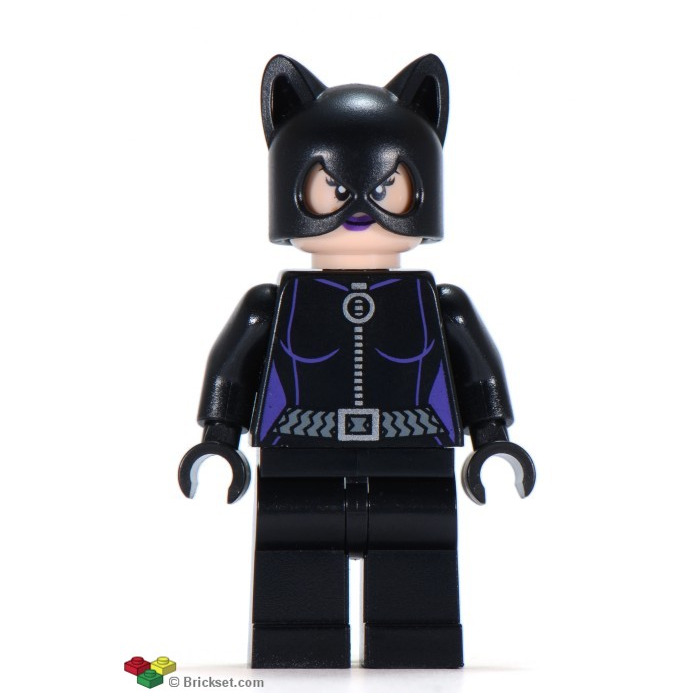
Catwoman


Setting the scene
 
The set that we used was provided by Zu3D, who are also the company who designed the animation programme that we used. It was comprised of a very basic stage shaped cardboard box along with a background image:


The Zu3D  stop-motion animation software was devloped for children of all ages, but also for adults, to be able to creat quick and easy animated films. With both simple features, for the younger childen, and more advanced features, for adults or the more technically minded child, it was a fun and simple programme for creating our own stop-motion animation.
 
 
The story - Friendship, bullies, and inclusion
 
The main storyline within our animation is the story of friendship and inclusion. We used a poem based on inclusion written by Randy Bassett from the Opening Hearts Inclusion Project in Canada.  It begins with the Ironman, Thor and Captain America playing hide and seek. It then moves on to the three of them playing football together, with Hawk Eye sat on a rock in the corner of the scene. The ball rolls over to the rock and Hawk Eye slides down and joins in the game, which the other characters are more than happy for him to do!
Following this, the next scene shows a continuation from the scene before, however during this The Hulk jumps down, knocks Thor over, and steals the football. Once he leaves, the others help to pick Thor up to show that friends always stick together regardless of what bullies may do!
The following scene shows all of the characters walking up to the front, and then off to the left or right. During this scene we see the introduction of Catwoman and Nick Fury. We decided to use these two characters to show that either gender or skin colour does not matter, or shouldn't matter amongst people, whcih unfortunately it does in our society.
Following this they all bow to a round of applause, apart from Hulk as wasn't as manouverable as the rest so we left him out for the purpose of the fluidity of the animation (and because he was a bully!)
 
 
Bringing it all together
 
Obviously, our animation would be completely boring with just visual stimulation so we had to add sounds! Zu3D has a wide selection of sound effects which are very easy to add in to animation, for example the sound of the ball being kicked and the 'camera' shattering were both inserted from the programme itself. However, we didn't think that they were enough so we decided to use a few songs from youtube (which were very easy to add in to the animation through Zu3D!)
Brian Ferry's 'let's stick together' we though was a very fitting sound to put in for when the characters are helping Thor up, whilst Sister Sledge's 'we are family' we thought was perfect for when all the characters are doing their walk up to the camera and off set. Finally, just because we couldn't resist a bit of cheese, we thought we would add 'We're all in this together' from high school music, just to reinforce the togetherness that we hope that all children can show!
 
To Conclude
 
What can i say about the project overall?
What a bloody nice change to the typical university assignment, being stuck in front of your laptop for hours on end, with litres of coffee just to keep you going, enough books to break your back, and then references - don't get me started. Although it was very challenging at times (perhaps more planning would take place if we had to do this again!) it was also very rewarding to see the final product, which i'm sure you're all dying to see by now!
Zu3D is a fantastic product, and i believe that it is perfect as an educational tool, especially with technology advancing so fast and becoming such an important factor in education!
Finally, thanks again to Randy Bassett for allowing us to use his peom for this project, and here it is! I hope you enjoy!


Stop Motion Aniamation

Stop Motion Animation

 
What is stop motion animation?
 
Stop motion animation is a technique used in film production to create the illusion of movement from a sequence of stills. The process involves using fixed objects that are secured in one position, photographed, then the objects are moved slightly, and photographed again. This process is then repeated until the required amount of photos are taken. When all the photographs are strung together, they create the illusion that the fixed objects are moving. Stop motion animation can be created with any variety of objects, though clay puppets are very commonly used. This is known as claymation.
Making a stop motion animation film can be very time-consuming, since the objects must be moved by hand between each photograph. Many photographs will be taken, and each photo may change only slightly. The more photos that are taken, and the less movement between each photo, the smoother the finished 'video' will appear. This style of animation often requires a significant amount of patience and a keen eye for detail, as the objects may need to be manipulated in more than one way between each frame that is shot. (http://www.wisegeek.com/what-is-stop-motion-animation.htm)
 
 
Video: What is stop motion animation?
 
 
Stop motion is carried out in a few very basic steps:
  • Take a picture of an object
  • Move the object slightly, and take another picture
  • Repeat the process as many times as required
  • Play them back in the sequence the photos were shot
  • And then you have the 'illusion' of movement

So what types of stop motion are there? Here are a few examples:
  • Puppets
  • Clay animation - or claymation
  • Cut-outs
  • Models
  • Silhouettes